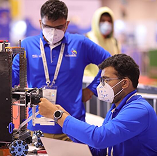
The Skill India Mission, launched by Prime Minister Narendra Modi on July 15, 2015, has reached a significant milestone by training over 50 million individuals across various skill development programs. This achievement underscores India's commitment to enhancing workforce capabilities, promoting employability, and strengthening industries through structured skilling initiatives.
Under flagship programs such as Pradhan Mantri Kaushal Vikas Yojana (PMKVY) and National Apprenticeship Promotion Scheme (NAPS), NSDC has provided industry-relevant training, helping millions secure jobs in sectors like healthcare, IT, automotive, and manufacturing. The initiative also focuses on upskilling and reskilling the workforce, ensuring alignment with emerging industry demands.
The Skill India Mission has been instrumental in closing the skill gap, enabling youth, women, and marginalized communities to gain economic independence. With a strong network of training partners, digital skilling platforms, and global collaborations, NSDC continues to empower individuals and drive India toward becoming the skill capital of the world.
Empowering the Workforce Across Sectors
The Skill India initiative has impacted a wide range of industries, including healthcare, IT, automotive, construction, retail, and manufacturing. By collaborating with private sector companies, educational institutions, and government agencies, NSDC has helped align skill development programs with real-world industry needs. Additionally, Recognition of Prior Learning (RPL) programs have certified millions of workers who previously lacked formal credentials, enabling them to access better job opportunities.
Digital Skilling & Technology-Driven Learning
With the rapid rise of Industry 4.0, NSDC has expanded its focus on digital skilling, offering AI-driven learning pathways, online certification courses, and virtual apprenticeship programs. The Skill India Digital Hub (SIDH) plays a crucial role in delivering personalized, self-paced, and interactive training for learners across urban and rural areas.